Writing Textbooks and the Importance of Accuracy
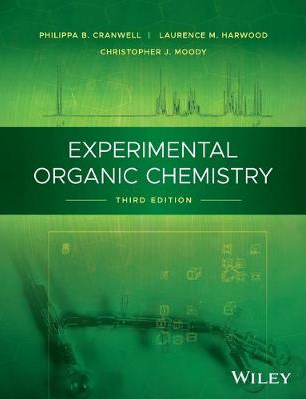
We’ve updated Experimental Organic Chemistry, the definitive guide to the principles and practice of organic chemistry, twice, which has been an international best-seller since 1989.
What We Did
Throughout her career, our founder Philippa has written three textbooks, numerous academic papers and several book chapters. But Experimental Organic Chemistry is arguably the most well-known and widely-read of all of them.
The 3rd edition was prepared by Philippa while she was still an Associate Professor of Organic Chemistry at the University of Reading – fun fact: all of the new 2D NMR spectra, advanced analytical data and new experiments were curated by her – in conjunction with Professors Laurence Harwood (Reading) and Chris Moody (Nottingham). This book is an institution, having sold over 25,000 copies since 1989 (which is massive for an academic textbook!), and now we’re working on the 4th edition.
Why It Matters
For Philippa, re-writing this textbook for the second time was important to ensure she keeps up-to-date with the field and can still recall organic chemistry techniques, both lab-based and analytical. This means that she can talk to clients about their needs, with a thorough understanding of the fundamentals. And they can trust that she ‘gets it’, maintaining scientific accuracy throughout all commissions. In fact, it wouldn’t be possible to write (or re-write) sections of the book without in-depth chemical knowledge.
We had to:
Be aware of what’s current within organic synthesis
Devise new experiments (where necessary) to showcase particular experimental techniques – knowing both where to look and who to ask
Remove all outdated references, or non-acceptable solvents and reagents
Add technical yet accessible explanations and examples for more modern techniques – including advanced 2D NMR experiments, and mass spectrometry instrumentation
Ensure accuracy and reliability.
The ConsultaChem Difference
An excellent working knowledge of practical organic chemistry, as well as strong project management skills were instrumental to this project's success.
Writing a textbook is not to be undertaken lightly – the 3rd edition took about 2 years, the fourth around 18 months. Rewriting both the 3rd and 4th editions required a strong working-knowledge of what is relevant within organic chemistry – both in terms of lab work and theoretical knowledge of the fundamentals – and the ability to select examples that exemplify certain behaviours. However, this is an example of how organisation is crucial, teamwork matters, and knowledge is king. All three of us worked closely, with Philippa co-ordinating, to release the final document to Wiley before the deadline, which is (apparently) unheard of!
Conclusion & Related Reading
Re-writing Experimental Organic Chemistry (twice!) is always fun, and allows us to really stretch our knowledge and understanding of the topic that we love. It also means that when clients come to us and work with advanced analytical experimentation, or develop methods and materials through organic synthesis, we can quickly grasp their area and why it’s important.
To buy the book, click the image below: